My intent in creating The Loop Log is to have a space where I can document my thoughts about technology and culture. Part of me is still that twelve‑year‑old boy sitting in his room, discovering what makes these machines tick, writing my first lines of code, playing games, and visiting online realms that few knew how to access. Another side of me is the grown man who has witnessed how these systems have reshaped society, how they have altered how humans interact with one another, how a security state has been set up to collect, track, and monitor, how propaganda campaigns can be amplified, and how rampant commercialism has come to dominate the innocent (perhaps somewhat naïve) sense of curiosity and wonder we once had in the early days of the public Internet. I believe the places where these tensions meet are exactly where things start to get interesting.
I will also use this space to document projects I’m working on, share code examples, learning experiences, and technical challenges as I continue to build my skill set.
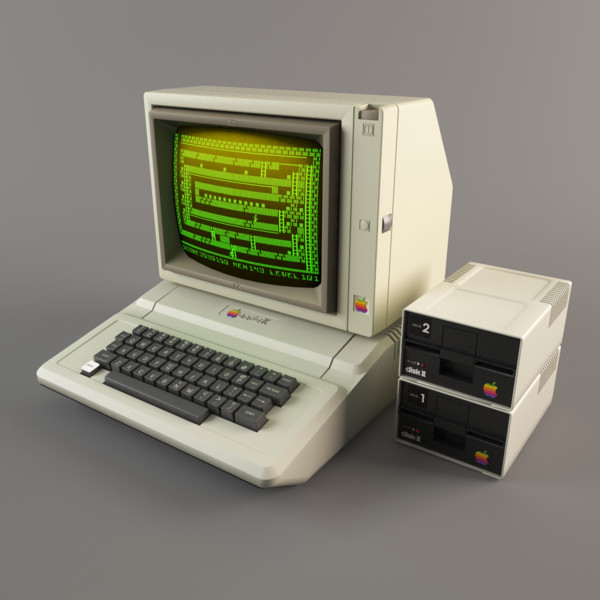
I’ve been a techie since I was young. The first keyboard my fingers ever touched (that wasn’t a typewriter) was on an Apple II. We had one in my 5th‑grade classroom (1981–82). Not long after, we began having “Computer Literacy” classes where we learned about hardware components and how to write simple programs in BASIC. I caught the bug.
By the end of the following school year (1982–83), I had my very own personal computer. A TRS‑80 Color Computer 2 (“CoCo 2”), running Color BASIC.

My father was kind. He had no idea what these newfangled machines were, but he conceded to my request and bought one for me. He also got me a dot‑matrix printer, a cassette tape external storage device, and – glory of all glories – an acoustic coupler (which served as a modem).

The “Telephone Interface” (as Radio Shack called it) was a 300‑baud device with distinctive rubber cups where you nestled the telephone handset. This enabled me to get connected. Granted, this was the early ’80s. We had the Internet, but not the World Wide Web (which wouldn’t arrive for another decade). Though these terms are often conflated today, they are not the same. The Internet is the global network of interconnected computers, while the World Wide Web is one of the services that runs on top of it, using web pages and hyperlinks. Back then, everything was text‑based. No browsers, no websites, no images. We barely had sound. Just bleeps and bloops. Think WarGames and you won’t be far off.
I’ll never forget the excitement of using that modem to call a friend’s computer. Right there on my own screen, in a terminal window, I could type text, he could see it on his screen across town, reply back, and I could see his response on mine. Amazing! Quaint now, but back then it was really something. Later we discovered Bulletin Board Systems (BBSes), and a whole new world opened up.
In other words, I was an early adopter. They called us “hobbyists.” Home computers were already a thing, such as the TRS‑80, Commodore 64, Apple II, Amiga, ZX81, but it was still a subculture. These machines weren’t yet ubiquitous. The general public was mostly unaware, if they even gave them a second thought. The relatively small geek culture not only knew how to use them, but speculated about what they might become. We sat on the edge of the precipice. We were hopeful and enthusiastic. This was the Dawn of the Digital Age.
Now, of course, everyone has a mini‑computer in their pocket with orders of magnitude more processing power than any of the machines I’ve mentioned. And our phone‑gazing culture raises questions about the zealous adoption of digital technologies into nearly every aspect of life. Yet there’s no putting the genie back in the bottle. I’m not sure I would even if I could. Despite the challenges and problematic aspects of tech disruption, these systems are – in essence – only tools. They are morally ambiguous machines. Like any tool, they can be both beneficial and harmful, depending on the intent of those who wield them. A hammer can be used to drive nails to build a house. A hammer can also be used to smash someone’s head in.
Even though I was an early adopter, there was a period between owning that TRS‑80 and having my first “modern” computer when I didn’t do much with computers at all. That changed in the late ’90s with the advent of the World Wide Web, modern browsers, websites, increased processing power, what has retroactively been referred to as Web 1.0. I reconnected (no pun intended) with what had been a youthful hobby. Eventually, it became my livelihood. I left the food service industry in 2000 and got my first tech job. I went from phone support in call centers to learning SQL and working with relational databases for a software company. More recently, I’ve begun teaching myself programming fundamentals, using Python as my entry point. I still remember BASIC and know SQL fairly well, but this is my first serious attempt at learning a modern general‑purpose programming language. On top of that, I aim to transition into a DevOps role. I’m actively working through a prioritized list of technologies to do just that. So you’ll see posts related to these topics as well.